
Character of Dushyanta in Kalidasa’s Abhijnanasakuntalam
Duhysanta is the central male figure in the ancient Indian play Abhijnanasakuntalam by Kalidasa. He is the king of the Pourava dynasty and is often referred to as the “sage king” or “rajarshi”. Kalidasa presents multiple shades in the character of Duhysanta through the complex plot of the play and through multiple perspectives. It is […]
The Yellow Wallpaper: Childbirth, Madness and Patriarchy
The Yellow Wallpaper, by Charlotte Perkins Gilman, is considered to be a seminal text in context of feminist literature. The short story, or novella, written in the form of journal entry, is about the gradual deterioration of a woman’s psychological balance. It is believed that Gilman used her own experiences with post-partum psychosis as the […]
Sailing to Byzantium: 6 Prominent Symbols
Symbols in “Sailing to Byzantium” by W.B.Yeats are best understood in terms of the ways in which Yeats negotiated with the anxieties of both personal and social implications of modernism. The prominent symbols help to add multiple dimensions to the poem, enriching the central theme of quest for immortality. Six of the most important symbols […]
Character of Sakuntala in Kalidasa’s Abhijnanasakuntalam
The character of Sakuntala, in Kalidasa‘s play Abhijnanasakuntalam is a remarkable fusion of beauty and moral prowess. On one hand she is the everlasting symbol of vulnerable womanhood; on the other hand, she proves to be heroic in her actions. Kalidasa adopts the character from the pages of Mahabharata and transforms her into a figure […]
Latin Influence on English Language
Latin influence on English language is perhaps the most important of all the foreign contributions that have enriched the English tongue. Latin contribution to English started long before the Anglo Saxons had come over to England. Latin influence on English language may be studied through three stages, the Pre-Christian stage, the Christianization stage and the […]
Rebel Angels in Paradise Lost : Milton’s Myth Making in Book 1
John Milton’s presentation of the rebel angels in Paradise Lost, as they rise from the lake of fire and light on the fiery land of hell, is an impressive myth created mainly out of Biblical accounts in the Old Testament. In his presentation, Milton is seen as a devout, almost fanatical Puritan, who was also […]
French Influence on English Language
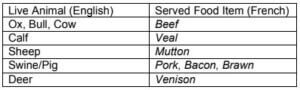
The French influence on English language started its course with the Norman Conquest of 1066 AD. William of Normandy defeated England in the Battle of Hastings and the governance of England fell into the hands of the French. The ruling class influenced not just the socio-political aspects of England but also its language. The French […]
The Title Mricchakatika: Justification and Analysis
The title Mricchakatika literally means “The Little Clay Cart”. It has both literal and metaphoric significance in the play. At the same time, the title bears marks of Sudraka’s originality. A detailed study of the play reveals how the title chosen by Sudraka is both interesting and appropriate. Sudraka’s Choice of Title Mricchakatika Sudraka, as […]
Representation of Society in Mricchakatika by Sudraka
Society in Mricchakatika is reflected in different aspects, primarily because the play is essentially a Prakarana. In a Prakarana, the story concentrates on experiences of the common men. It is a sub-genre of drama which derives its theme from issues of society and lives of ordinary men. In his play, Mricchakatika, Sudraka shows the troubles, […]
Vasantasena in Sudraka’s Mricchakatika : Character Analysis
Vasantasena is one of the most prominent characters found in Indian classical drama. Sudraka’s Mrichchakatika is a realistic presentation of characters in a unique story of love, loss and desire. The playwright goes beyond the usual conventions followed by traditional Indian dramatists. His originality of vision and capability is seen in his presentation of the central female character Vasantasena.