
A Doll’s House as a Problem Play
The Problem Play, as a genre, emerged during the 19th century as part of the Realism movement in theatre, notably influenced by Henrik Ibsen. Unlike the conventional, formulaic “well-made play” of the time, Ibsen’s work focused on real characters grappling with real-world issues, spurning farcical plots, and exploring controversial social and human questions that had […]
Realism in Ibsen’s Doll’s House
Realism, as a socio-literary movement, was a natural consequence of the Scientific Revolution that transformed European perspectives on faith, life, and religion. Realism in art portrays life as it is, without idealization or romanticism. It provides a stage for playwrights to express social views. The artist’s duty is honest observation and description of the world. […]
Character of Nora in A Doll’s House

Henrick Ibsen’s “A Doll’s House” is considered to be a revolutionary play primarily because of the central character, Nora Helmer. Ibsen presents Nora as a woman caught in the cocoon of social expectations, eventually undergoing transformation through her realization and radical rejection of societal norms. The portrayal of Nora is exceptional, not just on the […]
Character of Dushyanta in Kalidasa’s Abhijnanasakuntalam
Duhysanta is the central male figure in the ancient Indian play Abhijnanasakuntalam by Kalidasa. He is the king of the Pourava dynasty and is often referred to as the “sage king” or “rajarshi”. Kalidasa presents multiple shades in the character of Duhysanta through the complex plot of the play and through multiple perspectives. It is […]
Character of Sakuntala in Kalidasa’s Abhijnanasakuntalam
The character of Sakuntala, in Kalidasa‘s play Abhijnanasakuntalam is a remarkable fusion of beauty and moral prowess. On one hand she is the everlasting symbol of vulnerable womanhood; on the other hand, she proves to be heroic in her actions. Kalidasa adopts the character from the pages of Mahabharata and transforms her into a figure […]
Caliban in Shakespeare’s “The Tempest”: A Critical Analysis
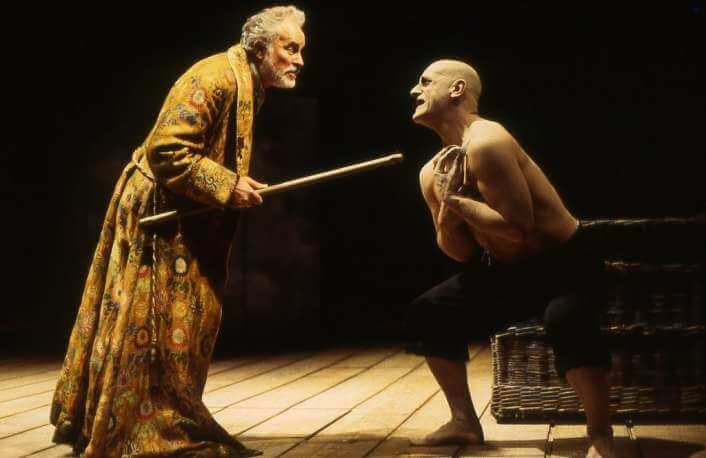
In “The Tempest”, William Shakespeare draws the character of Caliban with dubious shades. Critics down the ages have responded differently to the portrayal of Caliban. While some have downright dismissed him as a lowly savage, others (especially the post colonial critics) have focused on Caliban as the subjugated victim of colonial domination. Nonetheless, the portrayal […]
Alison in Look Back in Anger : Character Analysis

Alison in Look Back in Anger by John Osborne, represents a remarkable presence in elaborating the implications of the play’s central theme: Protest, though not in its most active form. The play explores and exposes the world of the 1950s, drowned in the visible darkness of post-war disillusionment. The despair and frustration, the anger and […]